
Seminole County Criminal Court Records
A criminal court record is the case file kept by the court after a criminal matter enters the court system. In Seminole County, felony criminal cases belong in Superior Court, which is part of the Pataula Judicial Circuit. The GSCCCA clerk profile identifies Earlene Bramlett as Clerk of Superior Court and lists Superior, Juvenile, and Magistrate records under the clerk. That case file is broader than an arrest entry because it follows the prosecution from charges through final disposition.
Criminal records may include an accusation, indictment, warrant-related entry, arraignment, plea paperwork, bond order, motions, hearing notices, trial entries, verdict, sentencing order, restitution, probation terms, and disposition. Magistrate Court may handle initial criminal functions such as warrants, first appearances, and bond steps, while the Superior Court file tracks felony prosecution. The full case file and sentencing detail should be separated from the charge-focused arrest pathway covered in Seminole County court charge records.
Search Seminole County Criminal Court Records
Georgia Courts e-access lists Seminole Superior through PeachCourt. Georgia Courts says provider access requires an account to search court records, so users should expect registration before viewing case information. If the online route does not show the file, or if a certified criminal disposition or sentencing order is needed, the practical route is the Seminole County Courthouse clerk office at 200 South Knox Avenue, P.O. Box 672, Donalsonville, GA 39845, phone 229-524-2525.
- Identify whether the matter is a Superior Court felony case, Magistrate first-appearance matter, Probate traffic/game/fish case, or city citation.
- Use the Georgia Courts e-access list and the Seminole Superior provider link for account-based court searching.
- Search with the case number if known, or use the defendant name and approximate filing year.
- Read the docket entries for charges, plea, motions, disposition, and sentencing events.
- Request certified copies from the Clerk of Superior Court when legal proof of disposition or sentence is needed.
Booking reports and law-enforcement records use a different channel. The Seminole County Sheriff's Office is led by Sheriff Heath Elliott, and its open-records form is documented for incident reports, accident reports, booking reports, body-camera footage, in-car camera footage, and other explained requests. Those records can support a criminal matter, but they do not replace the official court case file.
The Sheriff's open-records request form is the official route for booking and law-enforcement records.
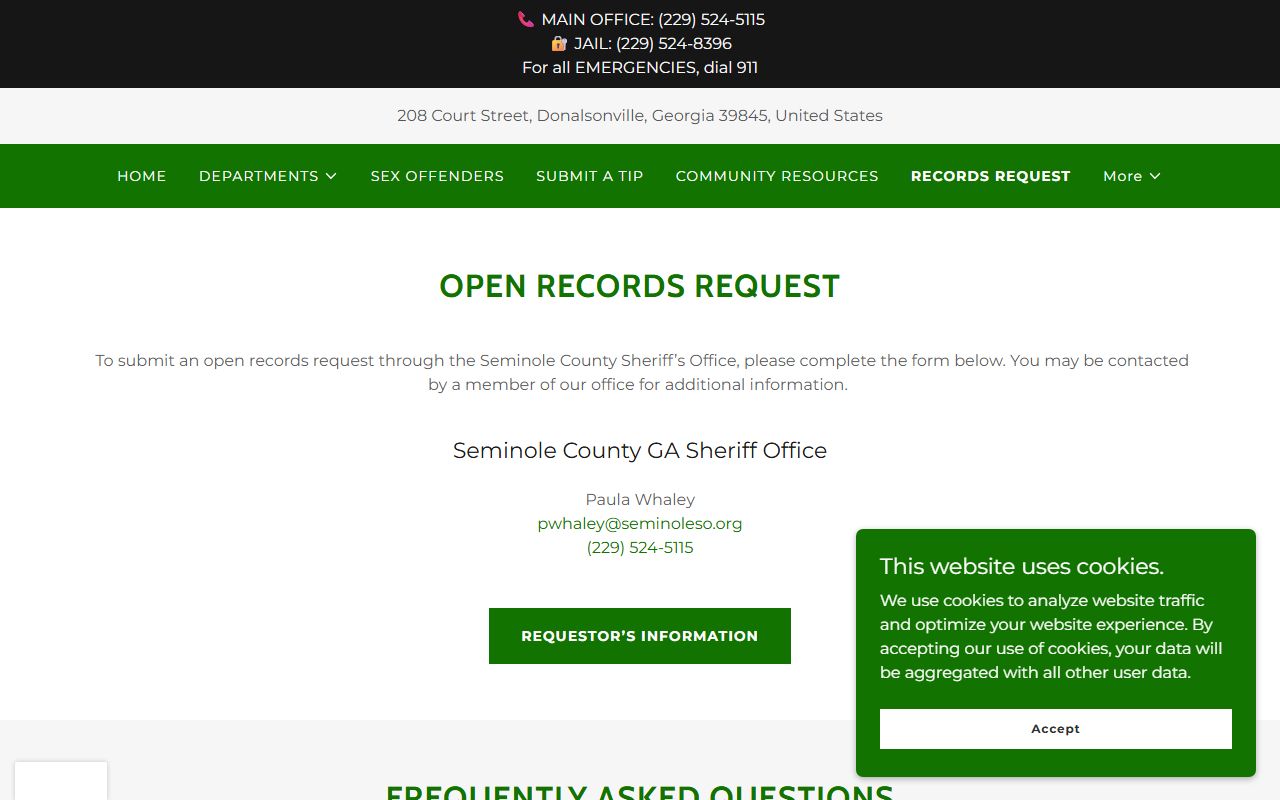
Use that sheriff form for reports and footage, then use the clerk or court provider for the criminal court record itself.
Seminole Criminal Case Flow
A Seminole County criminal case moves through stages that should leave docket entries or filed documents. An arrest or warrant may appear first in jail or sheriff data. Formal prosecution begins when charges are filed through an accusation, indictment, or other charging instrument. The court record then tracks arraignment, motions, plea or trial, disposition, and sentencing.
Case flow: Charges Filed › Arraignment › Pretrial / Motions › Plea or Trial › Disposition › Sentencing
| Stage | What Happens |
|---|---|
| Charges Filed | The prosecutor files or pursues the formal charge, often by accusation or indictment in Georgia criminal practice. |
| Arraignment | The defendant is called to answer the charges and enter a plea. |
| Pretrial / Motions | The parties file requests, raise legal issues, seek continuances, or prepare for plea or trial. |
| Plea or Trial | The case resolves by plea, bench or jury trial, dismissal, or another court action. |
| Disposition | The record shows the outcome of each charge, such as guilty plea, conviction, acquittal, dismissal, or transfer. |
| Sentencing | The court enters punishment or conditions, which may include jail, prison, probation, fines, restitution, or other terms. |
What Seminole Criminal Records Show
A Seminole County criminal court record should be read charge by charge. One arrest can produce several charges, and each charge can have its own status or disposition. Public jail roster examples show warrant numbers, statutes, charge descriptions, misdemeanor or felony flags, court fields, arresting agency, and bond values. The court record goes further by showing filed prosecution documents and case outcome when available.
| Field | What It Shows |
|---|---|
| Case Number | The court's criminal case identifier; no public Seminole case-number format was verified in official sources. |
| Defendant | The person charged in the criminal case. |
| Charges | The statute, charge description, misdemeanor or felony level, and any amended charge if shown. |
| Arraignment / Plea | The plea event, such as guilty, not guilty, or nolo contendere where recorded. |
| Motions and Orders | Requests filed by the parties and rulings entered by the judge. |
| Disposition | The outcome of each case or charge, including dismissal, plea, conviction, acquittal, or transfer. |
| Sentence | Jail, prison, probation, fines, restitution, conditions, or other terms after conviction or plea. |
| Restriction Status | Whether public access is limited by record restriction, sealing, juvenile rules, or court order. |
Charges vs Convictions
Being charged is not the same as being convicted. A charge is the allegation filed or pursued by the prosecutor. A conviction is the result after a guilty plea, verdict, or other adjudication that establishes guilt. A Seminole County criminal court record can show charges that were amended, reduced, dropped, dismissed, or resolved differently from the booking entry.
| Charge | Conviction | |
|---|---|---|
| Stage | Accusation or formal allegation | Outcome after plea or trial |
| Proof Level | Based on charging decision and probable cause context | Based on guilty plea, verdict, or adjudication |
| Record Meaning | Shows what was alleged or filed | Shows final criminal responsibility for that charge |
| Can Change | May be amended, reduced, dismissed, or nolle prossed | May be appealed, modified, or restricted only through proper legal process |
Prosecutor and Defense Records
The Pataula Judicial Circuit District Attorney handles prosecution for Seminole County Superior Court criminal matters. Official prosecutor sources identify Ronald "Vic" McNease Jr. as District Attorney, with the circuit office at 12850 Magnolia Street, Blakely, GA 39823, phone 229-724-3011, fax 229-724-3015, and email rmcnease@pacga.org. The prosecutor's role matters because record restriction after certain arrest dates may require contact with the prosecutor rather than the arresting agency.
The Pataula Judicial Circuit public-defender office serves the circuit from the Early County office. Official public-defender sources identify Chief Public Defender Marla Chambless, address P.O. Box 725, 575 College Street, Blakely, GA 39823, and phone 229-758-6236. The jail FAQ says inmates can complete a public-defender application while in jail and have it forwarded to the Public Defender's Office. Defense office files are not public court records, but court filings by appointed counsel may appear in the case docket.
The Prosecuting Attorneys' Council profile confirms the Pataula Judicial Circuit prosecutor contact.

That prosecutor contact is especially relevant for charge decisions and Georgia record-restriction steps tied to post-arrest outcomes.
Restricted Criminal Court Records
Georgia's public term for many criminal-history limits is record restriction, not always expungement. The GBI record restriction guidance explains that O.C.G.A. 35-3-37 can limit certain criminal-history records for non-criminal-justice purposes. For arrests after July 1, 2013, GBI says there is no application process through the arresting agency and the person must contact the prosecutor. For older arrests, the person applies at the arresting agency.
| Sealed / Restricted | Expunged | |
|---|---|---|
| Georgia Use | Record restriction limits public criminal-history dissemination in eligible cases. | Older casual term; Georgia sources emphasize restriction for criminal-history records. |
| Court File | May require a court order or separate sealing step. | Do not assume court documents are destroyed or removed from all systems. |
| Who to Contact | Prosecutor for many post-2013 arrests, arresting agency for older eligible arrests, or court for sealed files. | Ask the prosecutor, arresting agency, clerk, or counsel which process applies. |
The GBI page is the state source for criminal-history record restrictions.
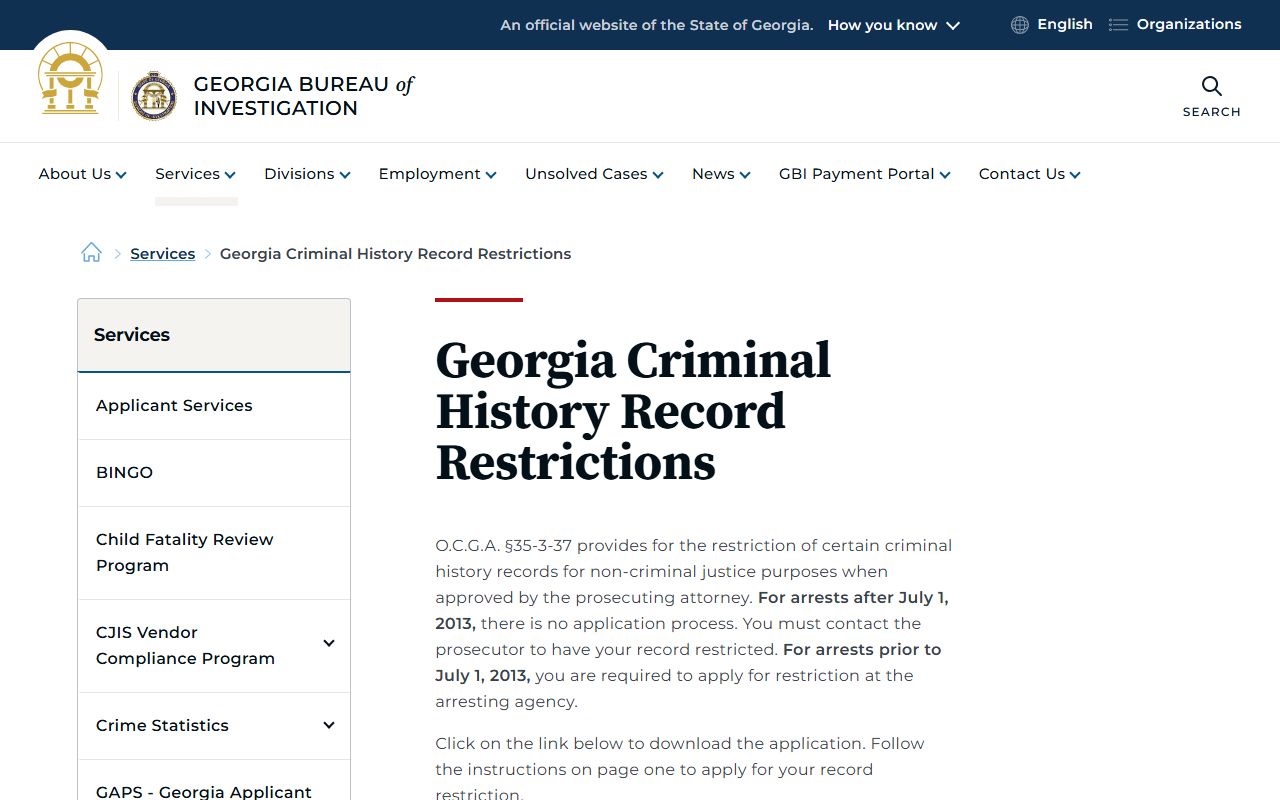
Restriction can affect public criminal-history dissemination, but a separate court-record issue may still need review by the Clerk or court.
Juvenile Criminal Record Limits
Juvenile records are treated differently from adult Seminole County criminal court records. GSCCCA identifies Juvenile among courts managed by the Seminole Clerk, but that does not make youth files open like adult Superior Court files. Georgia Department of Juvenile Justice guidance states that youth record requests require a signed release, and a guardian signature is required if the youth is under 18.
DJJ also notes that the juvenile system is designed to protect children from a lifelong juvenile delinquency record and that a petition to seal may be available. Public users should not expect a routine online juvenile criminal case lookup. Access depends on party status, attorney status, agency authority, release requirements, and court order.
The DJJ youth records request page gives the release-based request rule.
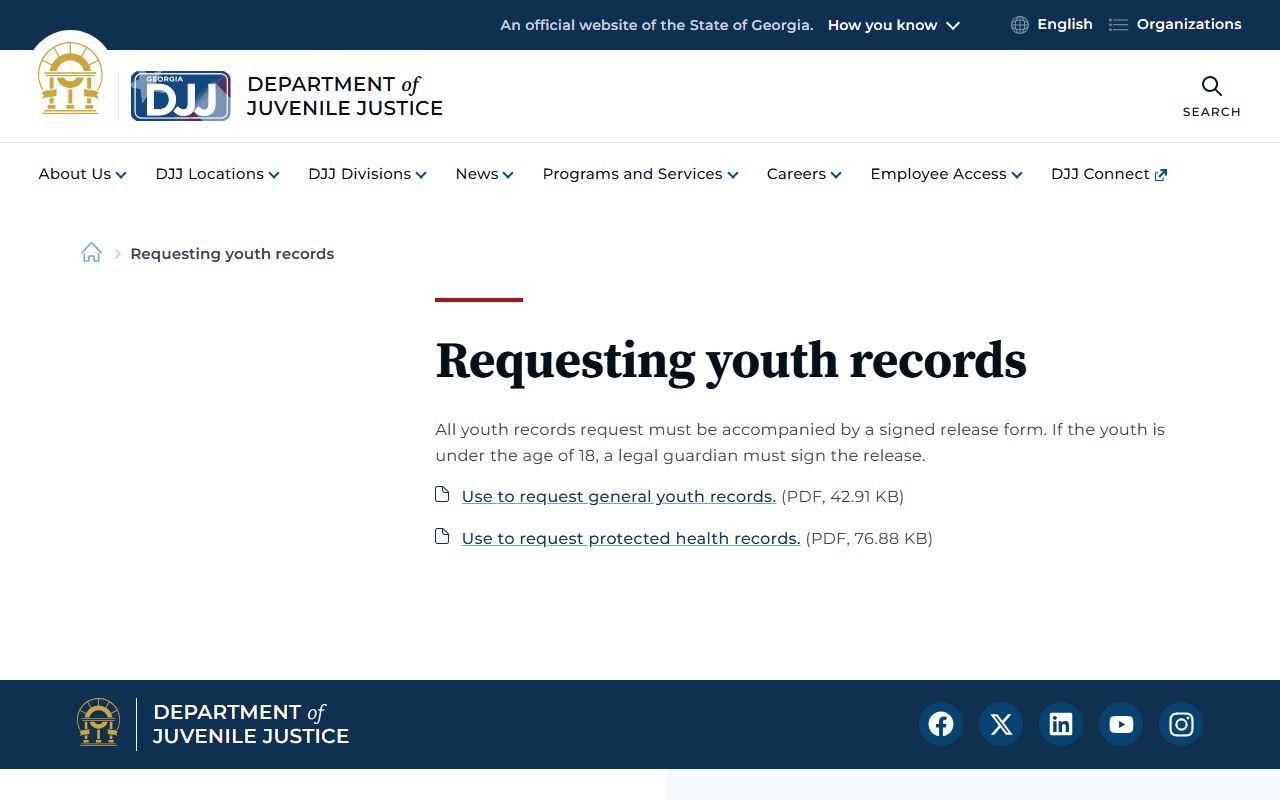
That youth-record process is separate from adult Seminole Superior Court criminal case searching.
The DJJ juvenile records FAQ explains the protective purpose of the juvenile system.
Juvenile confidentiality is one reason a name search may not return every law-related matter involving a young person.
Public Access to Criminal Records
Adult criminal court records are generally more open than juvenile, adoption, mental-health, or sealed files. Georgia's Open Records Act supports access to public records, and Uniform Superior Court Rule 21 treats Superior Court records as public unless limited by law or court order. Still, online account access, redactions, statutory limits, and certified-copy rules can affect how a Seminole County criminal court record is obtained.
Key Rules:
Uniform Superior Court Rule 21 treats Superior Court records as public unless law or court order limits access.
Georgia Open Records Act guidance explains the public-records presumption and response framework for government records.
Criminal Records and Checks
Criminal court records are not the same as a formal criminal-history background check. A court record can show case filings and outcomes from the court that handled the case. A criminal-history record can aggregate arrests, dispositions, fingerprints, and reporting from law-enforcement or state systems. For employment, housing, insurance, credit, or other regulated screening, a compliant consumer-reporting process may be required.
Important: Verify criminal dispositions with the court or official agency before using them for any legal decision.